by John McCarthy Consulting Ltd. | Nov 16, 2026 | Blog, News
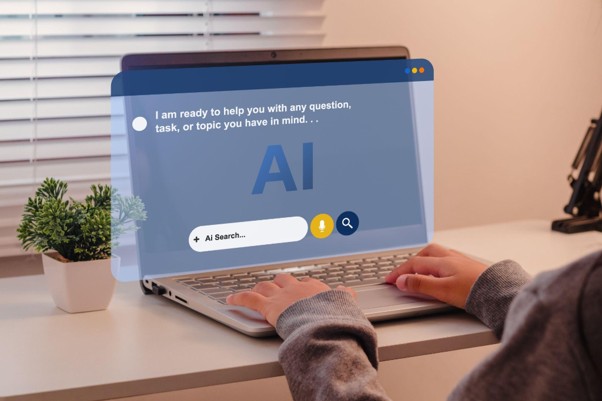
This is the first a short series of blogs on the use of AI in SMP accountancy and audit firms and is based on a very useful report published recently by Accountancy Europe which gives some practical examples of the use of Generative AI in Audit & Accountancy Work. You might ask what is GenAI?
The publication gives the following explanation ‘GenAI, is a type of AI technology capable of processing and generating text, images, videos and software code. Many widely used GenAI assistants are powered by Large Language Models (LLMs), which are designed to process and generate language. The public release of conversational tools such as ChatGPT in late 2022 brought GenAI into mainstream awareness almost overnight, and the technology has since found its way into the workflows of lawyers, doctors, software developers and, increasingly, auditors.’
According to Accountancy Europe, the three most practical uses of GenAI in SMP firms include:
- Knowledge Management;
- Administrative and drafting tasks; and
- Audit procedures and information analysis.
In this week’s blog, we focus on the first of these – knowledge management.
According to Accountancy Europe the safest and most practical starting point for an SMP firm is internal knowledge management.
A GenAI tool can be deployed as an internal assistant or chatbot and trained on the firm’s own material, audit methodologies, internal standards, templates and guidance. Staff can ask questions in plain language and retrieve the relevant guidance in seconds rather than searching through lengthy manuals.
The main advantage is that the tool draws only on the firm’s own, non-client information, so the confidentiality and data-protection concerns that can complicate other uses are reduced.
However, firms should still consider intellectual property rights and licensing restrictions before uploading materials. This is particularly relevant for third-party standards and guidance, which may be subject to licensing terms that restrict their use in an AI service.
Practical example of the use of GenAI for Knowledge Management in an audit firm
Accountancy Europe gives a practical example where a junior auditor is performing work on accounting estimates and needs to understand the firm’s methodology regarding management bias and the use of auditor-developed ranges. Rather than manually searching through multiple methodology documents, guidance notes and training materials, the auditor uses an internal GenAI-based knowledge assistant.
By asking questions in plain language, the auditor is directed to the relevant methodology sections, illustrative examples and internal guidance. This allows the auditor to access information more efficiently, but the auditor remains responsible for reviewing the underlying guidance, assessing its relevance and reliability, and determining whether it is applicable to the specific circumstances of the engagement.
Another practical example next week.
See our full range of updated letter of engagement templates, now including a paragraph dealing with the use of artificial intelligence, visit our online store here.
For those of you still in the process of ISQM 1 implementation, please see our ISQM TOOLKIT or if you prefer to chat through the different audit risks and potential appropriate responses presented by this new standard, please call or e-mail John McCarthy FCA or e-mail him at john@jmcc.ie.
We typically tailor ISQM training and brainstorming sessions to suit each firm’s unique requirements.
Publications:
- The ISQM TOOLKIT 2022 is available to purchase here.
- To ensure your letters of engagement and similar templates are up to date visit our site here where immediate downloads are available in Word format. A bulk discount is available for orders of five or more items if bought together.

by John McCarthy Consulting Ltd. | Oct 7, 2026 | Blog, News
The CCAB is the representative body for the five accounting bodies in the British Isles which include 285,000 accounts in the UK and Ireland.
Recently the CCAB has created an AI Hub which pools together helpful resources for professional accountants in relation to AI and Ethics, created by Member bodies including the ACCA and the Chartered Accountants Ireland.
The hub contains:
- a range of guidance and checklists about AI;
- a podcast series of ethical leadership issues discussing the use of AI by the profession;
- a Statement to the Profession on the Ethical Use of Artificial Intelligence; and
- six case studies covering a range of fictional scenarios which professional accountants are likely to encounter and use in their work, including specifically for those in practice:
- AI in collecting audit evidence; and
- Using synthetic client data for LLM training in a large firm.
All the templates on our website have had a refresh as of June 2026 and the letters of engagement have had a new paragraph added for the potential use of artificial intelligence and machine learning on client assignments along with auto enrolment for payroll assignments. There is a bulk discount (five templates for the price of four) for purchases of five or more templates when purchased in a single transaction.
If you need an up-to-date engagement letter, there is a search bar near the bottom of our home page (www.jmcc.ie) to quickly look up the item you need. More details see here.
For those of you still in the process of ISQM 1 implementation, please see our ISQM TOOLKIT or if you prefer to chat through the different audit risks and potential appropriate responses presented by this new standard, please call or e-mail John McCarthy FCA or e-mail him at john@jmcc.ie.
We typically tailor our training and brainstorming sessions to suit each firm’s unique requirements.
Publications:

by John McCarthy Consulting Ltd. | Jun 18, 2026 | Blog, News
Under the code of ethics of the professional accountancy bodies, it is mandatory for accountancy practices, when taking on a new client or renewing the professional relationship with an existing client, to obtain a signed letter of engagement setting out the terms of the business agreement and contracted services. This blog highlights the top ten of engagement letter contents. More tips to follow in future blogs.
What needs to be included in a letter of engagement?
The best written letters should include the following:
- Cover letter/key facts;
- Standard terms of business/limitation of liability (except for audit work in the RoI);
- Reference to the appropriate accounting framework such as IFRS, FRS 102 or FRS 105;
- Audit;
- Accountant’s reports (i.e. for audit exempt and unincorporated entity assignments);
- ‘Agreed upon Procedures’ such as under the International Federation of Accountants ISRS 4400 where an auditor simply provides a report of the factual findings of agreed-upon procedures and where no assurance is expressed. Users of such reports assess for themselves, the procedures and findings which are reported by the auditor and draw their own conclusions from the auditor’s work;
- Accounting services e.g. accounts production, management accounting, bookkeeping;
- Taxation services;
- Other services e.g., payroll (including auto enrolment), VAT returns, company secretarial services;
- Specialist reporting assignmentsg. Central Bank requirements for insurance brokers and the Accountants’ Report to the Law Society under the Solicitors Accounts Regulations, 2023.
All the templates on our website have had a refresh as of June 2026 and the letters of engagement have had a new paragraph added for the potential use of artificial intelligence and machine learning on client assignments along with auto enrolment for payroll assignments. There is a bulk discount (five templates for the price of four) for purchases of five or more templates when purchased in a single transaction.
If you need an up-to-date engagement letter, there is a search bar near the bottom of our home page (www.jmcc.ie) to quickly look up the item you need. More details see here.
For those of you still in the process of ISQM 1 implementation, please see our ISQM TOOLKIT or if you prefer to chat through the different audit risks and potential appropriate responses presented by this new standard, please call or e-mail John McCarthy FCA or e-mail him at john@jmcc.ie.
We typically tailor our training and brainstorming sessions to suit each firm’s unique requirements.
Publications:

by John McCarthy Consulting Ltd. | Jun 12, 2026 | Blog, News
Part one of this two-part blog appeared last week where we looked at how best to tighten the language used in tax and other engagement letters to help minimise liability and improve communication with clients.
Below we discuss the main elements of the improved additional wording that might be inserted into tax engagement letters. The points discussed may be applied to all types of engagement letter, with minor tweaks.
Exclusion clause. Because tax services can be broad, an exclusion clause that identifies what services will not be provided is invaluable. For example, a payroll taxes preparation engagement might exclude subcontractor tax and VAT compliance.
Deadline for submitting return information. Clearly state the deadline by which the client must provide the information needed to prepare the tax return.
Limitation on use of the returns. Clients may submit tax returns and/or supporting data (like rental income computations) to named third parties in lieu of a financial statement. It is essential to limit potential liability by naming those third parties and include a clause limiting the circulation of tax returns, supporting data and distribution and/or requiring advance written permission before allowing the client to circulate the information to those named third parties.
Tax position clauses. Often it can happen that clients think a certain approach is acceptable, but this may often conflict with professional standards. Include language stating that tax positions taken must satisfy professional and ethical standards.
Supporting documentation. Because a Revenue Audit or investigation is always a possibility, remind clients of their responsibility to maintain adequate records to support the deductions claimed on the return. Include in the letter a reminder of the length of time for which the records should be maintained.
Revenue Audit or Investigation. Representing a client in a Revenue Audit may be more involved than the tax return preparation itself, for which many accountants may want to deal in a different manner to the main tax assignment e.g. by allowing for the use of specialist advice. The engagement letter should state that in the event of a Revenue Audit or Investigation, the assignment will be covered by the terms of a separately signed engagement letter.
Outcome or results. The engagement letter is not a marketing device. Never guarantee the outcome or results.
Limitation of liability. Ensure such clauses are used appropriately.
Complaints/best service. Make it clear what the lines of communication are, in the event of a dispute or claim (by giving the contact name for the Partner/Director in your organisation that will primarily handle client complaints) and in the event of failure to reach a satisfactory outcome give the contact details of your professional body.
If you need an up-to-date engagement letter, there is a search bar near the bottom of our home page (www.jmcc.ie) to quickly look up the item you need. More details see here.
For those of you still in the process of ISQM 1 implementation, please see our ISQM TOOLKIT or if you prefer to chat through the different audit risks and potential appropriate responses presented by this new standard, please call or e-mail John McCarthy FCA or e-mail him at john@jmcc.ie.
We typically tailor our training and brainstorming sessions to suit each firm’s unique requirements.
Publications:

by John McCarthy Consulting Ltd. | Jun 7, 2026 | Blog, News
Tightening the language used in tax and other engagement letters will help limit your professional liability. This is part one of a two-part series of blogs on tax engagement letters.
Accountancy firms are taking a renewed interest in having well written and up to date engagement letters. In this blog we outline the fundamentals of best practice in tax engagement letters, and we suggest provisions that will help minimize legal liability faced by accountants in practice.
Professional liability insurers and defence solicitors will often agree that engagement letters are one of the first lines of defence in a professional negligence claim against an accountant. When drafted properly, engagement letters form the basis for an enforceable contract and should contain:
- caveats unique to the scope of the service provided
- state the amount of risk inherent in the engagement, and
- ensure that professional standards are met.
Over the years, in our experience, the majority of claims (by frequency) reported by leading professional indemnity insurers arise from tax services, yet individual tax engagements are where engagement letters are hardly ever used.
General Principles for all Engagement Letters
The following ten general principles apply to almost all types of engagement letter.
- Address the letter to the appropriate parties in a formal introductory paragraph.
- Exclude any taxes not within the scope of the tax return
- Exclude other entities owned by the individual tax client, if dealt with elsewhere.
- Include the appropriate year or years that are being prepared.
- Identify which returns are being prepared, and do not combine multiple returns. (For example, do not include a gift tax return service with an income tax return unless the proper disclaimer language for a gift tax return is included.) The following language is highly recommended.
‘We will prepare your [Year] income tax return. This engagement pertains only to the [Year] tax year, and our responsibilities do not include preparation of any other tax returns that may be due to any tax authority. Where we receive specific instructions from you about other taxes or other tax years, these assignments will be the subject of separate engagement letters. ‘
- Deal with the price of the service, payment terms, retainers, additional charges for information received late, additional fees.
- Clarity and diligence must be adhered to, as many professional liability lawsuits, professional body ethical complaints, and loss of clients have resulted from misunderstanding these provisions. Too often, a phrase like the following is used in a standard letter:
‘Our fee for services will be at our standard hourly rate for the personnel assigned to this engagement [or fixed fees to cover other than hourly fee arrangements]. Payment is expected when our services are complete.’’ This is far too vague and uncertain.
- The following improvements to the wording will help a lot:
- Specify more clearly the payment terms.
- If you wish, stipulate that a retainer will be required and will be applied toward the final fee and that the retainer is not an estimate of the fee charged for services.
- Identify when payment is expected.
- Provide for a termination of services if the fee is not paid in full.
- Use an additional charge clause for services not originally contemplated.
- Include a provision for reimbursement for out-of-pocket expenses such as travel, registered delivery, etc.
- Use a tax checklist that is sent to clients. The value of tax checklist in defending a professional liability claim cannot be overstated. However, many tax advisers complain that their clients do not complete the checklist and often return it unopened.
Accountants and tax advisers need to get the client to take responsibility for completing the checklist. The language used in the engagement letter should establish this responsibility:
‘We will prepare the returns from information which you will furnish to us. It is your responsibility to provide all the information required for the preparation of complete and accurate returns. We will furnish you with questionnaires and/or worksheets as needed to guide you in gathering the necessary information. Your use of such forms will assist us in keeping our fee to a minimum. To the extent we render any accounting and/or bookkeeping assistance, it will be limited to those tasks we deem necessary for preparation of the returns’.
- AI – include an appropriately worded paragraph in the letter of engagement informing clients about the potential use of artificial intelligence in carrying out tax assignments. All our template engagement letters on the website have been updated with such a paragraph about AI.
More next week on the style of improved wording that a tax engagement letter might contain.
If you need an up-to-date engagement letter, there is a search bar near the bottom of our home page (www.jmcc.ie) to quickly look up the item you need. More details see here.
For those of you still in the process of ISQM 1 implementation, please see our ISQM TOOLKIT or if you prefer to chat through the different audit risks and potential appropriate responses presented by this new standard, please call or e-mail John McCarthy FCA or e-mail him at john@jmcc.ie.
We typically tailor our training and brainstorming sessions to suit each firm’s unique requirements.
Publications: