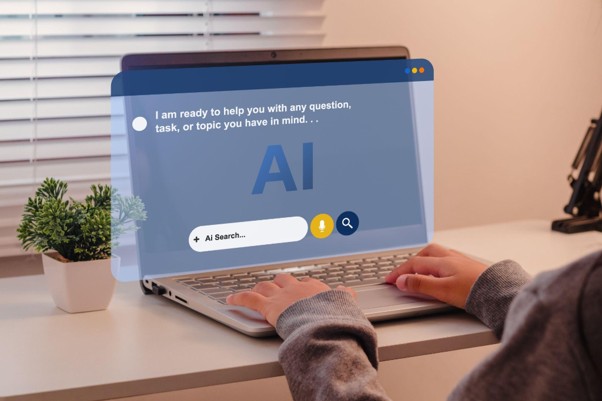
This is the first a short series of blogs on the use of AI in SMP accountancy and audit firms and is based on a very useful report published recently by Accountancy Europe which gives some practical examples of the use of Generative AI in Audit & Accountancy Work. You might ask what is GenAI?
The publication gives the following explanation ‘GenAI, is a type of AI technology capable of processing and generating text, images, videos and software code. Many widely used GenAI assistants are powered by Large Language Models (LLMs), which are designed to process and generate language. The public release of conversational tools such as ChatGPT in late 2022 brought GenAI into mainstream awareness almost overnight, and the technology has since found its way into the workflows of lawyers, doctors, software developers and, increasingly, auditors.’
According to Accountancy Europe, the three most practical uses of GenAI in SMP firms include:
- Knowledge Management;
- Administrative and drafting tasks; and
In this week’s blog, we focus on the first of these – knowledge management.
According to Accountancy Europe the safest and most practical starting point for an SMP firm is internal knowledge management.
A GenAI tool can be deployed as an internal assistant or chatbot and trained on the firm’s own material, audit methodologies, internal standards, templates and guidance. Staff can ask questions in plain language and retrieve the relevant guidance in seconds rather than searching through lengthy manuals.
The main advantage is that the tool draws only on the firm’s own, non-client information, so the confidentiality and data-protection concerns that can complicate other uses are reduced.
However, firms should still consider intellectual property rights and licensing restrictions before uploading materials. This is particularly relevant for third-party standards and guidance, which may be subject to licensing terms that restrict their use in an AI service.
Practical example of the use of GenAI for Knowledge Management in an audit firm
Accountancy Europe gives a practical example where a junior auditor is performing work on accounting estimates and needs to understand the firm’s methodology regarding management bias and the use of auditor-developed ranges. Rather than manually searching through multiple methodology documents, guidance notes and training materials, the auditor uses an internal GenAI-based knowledge assistant.
By asking questions in plain language, the auditor is directed to the relevant methodology sections, illustrative examples and internal guidance. This allows the auditor to access information more efficiently, but the auditor remains responsible for reviewing the underlying guidance, assessing its relevance and reliability, and determining whether it is applicable to the specific circumstances of the engagement.
Another practical example next week.
See our full range of updated letter of engagement templates, now including a paragraph dealing with the use of artificial intelligence, visit our online store here.
For those of you still in the process of ISQM 1 implementation, please see our ISQM TOOLKIT or if you prefer to chat through the different audit risks and potential appropriate responses presented by this new standard, please call or e-mail John McCarthy FCA or e-mail him at john@jmcc.ie.
We typically tailor ISQM training and brainstorming sessions to suit each firm’s unique requirements.
Publications:
- The ISQM TOOLKIT 2022 is available to purchase here.
- To ensure your letters of engagement and similar templates are up to date visit our site here where immediate downloads are available in Word format. A bulk discount is available for orders of five or more items if bought together.